




English · 1 November 2026 · 4 min read
How to Catch Big Perch: 6 Strategies for Perch Over 40 cm
Also available in: FrançaisDeutsch

Catching perch is easy. Catching big perch consistently is a completely different challenge.
Most anglers catch plenty of small fish but struggle to find the larger, dominant perch. According to experienced anglers, this is not a coincidence: large perch behave differently and need a different approach.
If you want to target perch over 40 cm specifically, you need to adjust your mindset, lure selection and fishing strategy. Here are the key principles.
At FiTU we catch big perch regularly, and the principles below are the ones that keep coming up among experienced perch anglers.
Big perch fishing at a glance
- Large perch are rare, so patience matters.
- Revisit productive spots: sandbanks, current seams, points and woody shorelines.
- Larger lures help filter out smaller fish.
- Hook size and lure type influence which fish bite.
- Experiment with retrieve speed to trigger strikes.
1. Accept that big perch are rare
One of the most important points when targeting large perch is managing your expectations. Large perch are far less common than small fish. Instead of forming big schools, they often move in very small groups or even alone.
Because of this, targeting big perch usually means:
- fewer bites
- fewer fish overall
- more time between catches
Patience is essential. Anglers who constantly chase numbers often miss the chance to meet the biggest fish in the water. In heavily fished waters, perch can also become cautious and learn to avoid common lures, which makes persistence even more important.
2. Find the spots big perch keep coming back to
Perch are not static fish. They move constantly while searching for food. However, they also tend to revisit certain areas again and again, and these locations usually share one thing: they offer feeding opportunities.
Typical structures where large perch appear regularly include:
- sandbanks
- current seams
- shoreline points or headlands
- woody shorelines
If you catch a big perch in a location, there is a good chance another one will appear there later, especially at a similar time of day or season. Successful anglers build a map of high-percentage spots instead of exploring water at random.
3. Use larger lures to target larger perch
A common strategy for big perch is fishing larger soft plastics. Many anglers report that perch caught on larger lures are noticeably bigger, and a typical size range is around 4 inches or more.
Interestingly, large perch often do not hesitate to attack bigger prey even when smaller baitfish are around. For that reason, many anglers avoid small lures when they specifically want to target bigger fish.
4. Match hook size to the lure to avoid small perch
Another tactic from experienced perch anglers is combining a short hook with a longer soft lure. An example setup:
- 2/0 jig hook
- 12 to 15 cm soft plastic
This works because smaller perch frequently attack the tail of the lure without inhaling the whole bait. Larger perch tend to engulf the lure completely and are hooked more reliably. This simple adjustment can noticeably reduce the number of small fish you catch.
For bottom-oriented soft plastic fishing, compact tungsten jig heads, such as the FiTU round jig head or the NED head used in finesse setups, help maintain good bottom contact and sensitivity while presenting the lure naturally.
5. Choose lure types that produce bigger perch
According to experienced anglers, some lure types catch larger perch more consistently. Three categories come up again and again.
Rubber jigs
Soft plastics fished close to the bottom frequently attract larger perch, even when the lure itself is relatively small.
Larger crankbaits
Small crankbaits catch many perch, but bigger crankbaits (around 5 to 10 cm) often result in fewer but larger fish.
Large stickbaits
Surface stickbaits of around 10 cm or more sometimes attract particularly aggressive, dominant perch. These fish are often described as the “alpha perch” of a system.
6. Vary your retrieve speed
Successful anglers report that very different retrieve styles can work for large perch. Three approaches are commonly used.
Fast retrieves
A fast presentation can trigger reaction bites before the fish has time to inspect the lure.
Linear retrieves
A steady, constant retrieve is often effective with crankbaits and other moving lures.
Very slow retrieves
Some anglers prefer extremely slow presentations for cautious fish. Slowly dragging rubber jigs or soft plastics along the bottom, for example on Texas-rig style setups with tungsten bullet weights, can sometimes convince older perch to bite.
Big perch from the FiTU team
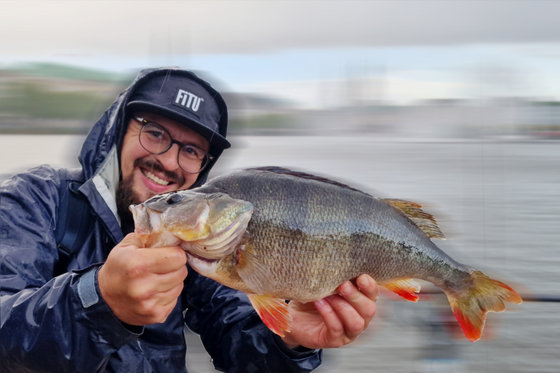
A few of the big perch caught by the FiTU team and crew. They are rare, but with the right spots, lure size and patience, they show up regularly.


Meet the FiTU team and crew.
Conclusion: targeting big perch takes a strategy
Catching big perch consistently is not about luck. Large perch are rare and require patience, productive spots should be revisited regularly, larger lures help filter out smaller fish, hook size and lure type influence which fish bite, and experimenting with retrieve styles can trigger strikes. Anglers who combine these factors and stay persistent dramatically increase their chances of connecting with the largest perch in their water.
Looking for lead-free tackle for your next big perch session? Browse the FiTU tungsten range.
Big perch FAQ
What counts as a big perch?
In this guide we are talking about perch over 40 cm, which are far rarer than smaller fish and behave differently.
What lure size catches the biggest perch?
Many anglers targeting big perch use soft plastics of around 4 inches or more. With hard baits, crankbaits of roughly 5 to 10 cm often give fewer but larger fish, and surface stickbaits of 10 cm or more can attract dominant perch.
Which hook size helps avoid small perch?
Combine a short hook with a longer soft lure, for example a 2/0 jig hook with a 12 to 15 cm soft plastic. Small perch tend to nip the tail, while large perch usually engulf the whole lure.
Do big perch live in schools?
Large perch are far less common than small ones and often move alone or in very small groups instead of large schools.
What retrieve works best for big perch?
There is no single answer. Fast retrieves can trigger reaction bites, a steady linear retrieve suits crankbaits, and very slow presentations along the bottom can convince cautious, older perch.